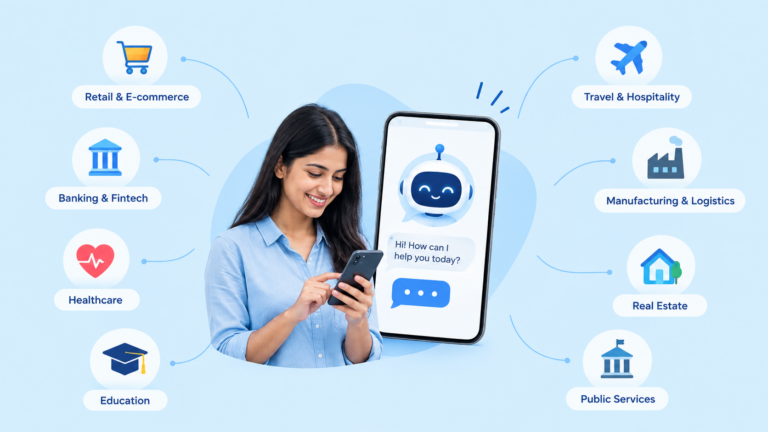
A Smarter Way to Recommend Products Through WhatsApp Business Messaging
Introduction
Online shoppers often struggle to choose between different products, compare features, or discover items that match their needs. At the same time, businesses face the challenge of reaching customers without overwhelming them with irrelevant promotions.
WhatsApp provides a direct communication channel where businesses can answer questions, introduce relevant products, and guide customers through their buying journey.
However, successful product recommendations require more than sending promotional messages. Businesses need to understand customer preferences, use available information appropriately, and communicate at moments when their suggestions can provide genuine value.
By combining customer insights, WhatsApp Business Platform capabilities, and carefully designed automation, businesses can create more relevant product discovery experiences.
This article explains how businesses can develop a personalized WhatsApp recommendation strategy that supports customer satisfaction and sales growth.
1. Build Recommendations Around Customer Interests
Every customer has different preferences, priorities, and purchasing requirements. A recommendation that works for one person may be completely irrelevant to another.
Businesses should therefore organize their recommendations around meaningful customer information instead of distributing identical product offers to everyone.
Depending on the available systems and customer permissions, useful information may include:
- Previous orders and frequently purchased products.
- Product categories a customer has explored.
- Questions raised during earlier conversations.
- Customer-selected preferences.
- Products a customer has expressed interest in.
- Responses to previous product suggestions.
For example, a home appliance retailer could recommend an appropriate air purifier to a customer who has asked about improving indoor air quality.
The message should explain how the product relates to the customer’s stated requirement.
A useful recommendation answers three questions:
- Why is this product relevant to the customer?
- What problem or need can it address?
- What can the customer do if they want to learn more?
This approach helps businesses provide value instead of treating every conversation as a sales opportunity.
2. Identify Opportunities Throughout the Customer Journey
Product recommendations can be useful at different stages of the customer journey, from initial product discovery to repeat purchases.
Businesses should identify the situations in which a recommendation is most likely to help.
During Product Discovery
When a customer asks about a product category, businesses can introduce a small selection of suitable options.
For example, a customer looking for office furniture might receive recommendations for desks that match their preferred size and budget.
After an Order Is Completed
Once a customer purchases a product, the business can introduce accessories or complementary items that improve its usefulness.
A customer who buys a camera, for instance, might be interested in a compatible memory card or carrying case.
When Customers Need an Alternative
If a product is unavailable or does not meet a customer’s requirements, businesses can suggest comparable alternatives.
The alternatives should match the customer’s original preferences as closely as possible.
When Customers Return to Explore Products
Returning customers may appreciate recommendations based on their previous interests, provided the information is current and relevant.
When Customers Need Assistance
If a customer asks how to use a product or improve its performance, the business can offer a suitable accessory, service, or related product when it genuinely addresses the customer’s needs.
Recommendations should always respect customer preferences and communication permissions. Businesses should not assume that every customer interaction automatically authorizes promotional follow-ups.
3. Choose the Right Recommendation Strategy
Businesses can use different recommendation methods depending on their products, audience, and sales objectives.
Related-Product Recommendations
These suggestions introduce products that naturally complement a customer’s current selection.
For example, a furniture store could recommend matching bedside tables to someone purchasing a bed.
This method works particularly well when products are commonly used together.
Premium-Product Recommendations
Sometimes customers may benefit from a more advanced product with additional capabilities.
A business selling headphones, for example, could explain the differences between standard and premium models, highlighting features such as noise cancellation or battery performance.
The recommendation should be based on customer requirements rather than price alone.
Alternative-Product Suggestions
Customers may appreciate alternatives when an item is unavailable, outside their budget, or unsuitable for their needs.
Businesses can recommend comparable products and clearly explain the differences.
Repeat-Purchase Recommendations
For products that customers regularly consume or replace, businesses can provide relevant reminders and suggestions where appropriate.
Examples include personal care products, household supplies, and other frequently purchased items.
These recommendations should be based on reasonable purchase patterns and customer preferences rather than sending unnecessary reminders.
4. Create Interactive Product Experiences
Customers should be able to explore recommended products without having to navigate a complicated process.
WhatsApp Business messaging offers several ways to make product discovery more convenient, depending on the messaging solution and supported features.
Product images: Visual content helps customers understand a product’s appearance and design.
Product catalogues: Businesses can share supported catalogue items to help customers browse products and available information.
Interactive buttons: Appropriate buttons can direct customers to product details, support, or other relevant destinations.
List messages: Where supported, structured lists can help customers compare a limited selection of choices.
Direct conversation: Customers should have a convenient way to ask questions or request human assistance.
For example, an electronics retailer could share three laptop options with short descriptions of their key differences. Customers could then select a model to explore further.
Avoid presenting too many options in a single message. A focused selection is often easier for customers to understand.
5. Connect Customer Data with WhatsApp Communication
Personalized recommendations become more useful when businesses can connect customer information with their communication processes.
A CRM system can help organize information about previous purchases, preferences, enquiries, and customer interactions.
When appropriate integrations are available, businesses can use this information to segment customers and identify relevant products.
For example, a business might create customer groups based on:
- Products previously purchased.
- Interest in a particular category.
- First-time versus repeat purchases.
- Preferred product features.
- Enquiries that require follow-up.
Consider an online store that sells skincare products. A customer who has expressed interest in moisturizers could receive information about suitable products within that category instead of unrelated promotional offers.
A relevant message could say:
“Hi [Customer Name], you recently explored our moisturizer collection. We’ve added a few options that may suit your preferences. Would you like to take a look?”
This message refers to the customer’s interest and asks permission to continue the interaction.
Businesses should ensure that customer data is handled securely and used in accordance with applicable privacy requirements and customer permissions.
6. Use Automation to Deliver Timely Recommendations
As a business grows, managing product suggestions manually becomes increasingly difficult. Automation can help teams organize repetitive communication tasks and respond to customer activity more efficiently.
Using the appropriate WhatsApp Business Platform integrations, businesses can design workflows around relevant customer events.
A typical workflow may include:
Step 1: Identify a relevant event. A customer purchases a product, requests information, or expresses interest in a category.
Step 2: Check the available customer information. The system identifies relevant preferences or previous interactions.
Step 3: Determine whether communication is appropriate. The workflow checks customer consent, applicable messaging requirements, and the relevance of the proposed message.
Step 4: Select a suitable recommendation. The business chooses a product that matches the customer’s needs.
Step 5: Send the message. An appropriate WhatsApp message is delivered using the required messaging format.
Step 6: Manage the response. Customer replies can be routed to the relevant team or handled through supported automated workflows.
Skyfree can be part of a WhatsApp Business communication strategy that uses API-based messaging and integrations to support customer engagement and automation, depending on the features available in the account.
Businesses should test workflows before deployment and ensure that customers can reach a human representative when automated responses are insufficient.
7. Maintain Customer Trust and WhatsApp Compliance
Personalization should never come at the expense of customer trust.
Businesses must follow the applicable WhatsApp Business Platform policies and ensure that their messaging practices respect customer preferences.
Important practices include:
- Obtain the required permission before sending business-initiated promotional messages.
- Use approved templates when required by WhatsApp’s rules.
- Follow applicable messaging-window requirements.
- Respect requests to unsubscribe or stop receiving marketing messages.
- Avoid sending repetitive or misleading product offers.
- Provide accurate information about product prices, availability, and features.
- Use customer information responsibly.
Businesses should also distinguish between messages that respond to a customer’s request and messages intended to promote additional products.
When promotional communication is appropriate, the content should clearly explain the product’s value and give the customer a straightforward next step.
Maintaining these practices can help businesses develop more sustainable customer relationships.
8. Evaluate Performance and Improve Recommendations
A recommendation strategy should be reviewed regularly to understand whether it benefits customers and supports business objectives.
Businesses can track several performance indicators.
Engagement rate: Measures how customers interact with recommendation messages.
Click-through rate: Shows how frequently customers select product links or interactive options.
Reply rate: Helps identify whether recommendations encourage meaningful conversations.
Conversion rate: Measures the proportion of interactions that result in purchases.
Revenue per campaign: Helps evaluate the commercial value of recommendation campaigns.
Opt-out rate: Indicates whether customers may be receiving unwanted or excessive messages.
Businesses can also compare different approaches, such as recommendations based on purchase history versus suggestions based on customer-selected interests.
These comparisons should be conducted responsibly, with appropriate customer permissions and sufficient attention to customer experience.
Use the results to improve product selection, message timing, and the clarity of recommendations.
Conclusion
Personalized product recommendations can help businesses make WhatsApp communication more useful, relevant, and customer-focused.
By understanding customer preferences, choosing appropriate products, providing interactive experiences, and using automation carefully, businesses can simplify product discovery and create more meaningful conversations.
Skyfree can support a broader WhatsApp Business messaging strategy through available API capabilities and integrations, helping businesses organize communication and develop workflows suited to their requirements.
The most effective approach is not to send more messages, but to make each message more valuable. When recommendations are relevant, transparent, and respectful of customer preferences, businesses can build stronger relationships while creating opportunities for sustainable growth.